The other night, I was sitting at my workbench, the smell of cedar shavings in the air and a half-finished upcycled nightstand staring me down, when I realized I’d spent the last twenty minutes scrolling through mindless tech news instead of actually using my tools. It’s that frustrating, phantom itch—the one where your hand reaches for your pocket before your brain even realizes you’re bored. We’ve all been there, caught in that loop where we feel like we’re “staying informed” but we’re really just losing our grip on the present moment. I used to think I just needed a fancy productivity app to fix it, but I finally learned that figuring out how to stop checking your phone isn’t about downloading more software; it’s about reclaiming your intentionality.
I’m not here to sell you on some expensive digital detox retreat or a complicated system that takes more work than the distraction itself. Instead, I want to share the practical, no-nonsense strategies I’ve used to bridge the gap between my digital life and my real-world passions. We’re going to look at actionable shifts you can make right now to turn your device back into a tool rather than a master, so you can get back to building things that actually matter.
Table of Contents
- Decoding the Dopamine Loop Explained and Its Impact
- Identifying Common Smartphone Dependency Symptoms in Daily Life
- Practical Moves to Break the Cycle and Get Your Life Back
- Quick Wins for Reclaiming Your Mental Space
- Reframing Your Relationship with the Screen
- Reclaiming Your Time and Your Life
- Frequently Asked Questions
Decoding the Dopamine Loop Explained and Its Impact

To understand why we reach for our devices without even thinking, we have to look at the biology behind it. When you get a notification or see a “like” on a post, your brain releases a tiny hit of dopamine. This is the dopamine loop explained in its simplest form: your brain creates a reward circuit that craves that next little spark. It’s not a lack of willpower; it’s your neurochemistry playing a game against you. These apps are literally engineered to keep you scrolling by providing unpredictable, intermittent rewards that keep your brain on edge.
The problem is that this constant cycle has a real-world cost, specifically when it comes to improving focus and attention span. When we constantly interrupt our deep work or creative hobbies—like when I’m mid-way through a woodworking project and suddenly find myself scrolling through Twitter—we’re training our brains to expect constant stimulation. Over time, this can lead to various smartphone dependency symptoms, making it feel almost impossible to sit still with a single task or a good book. Recognizing this loop is the first step toward reclaiming your mental space.
Identifying Common Smartphone Dependency Symptoms in Daily Life
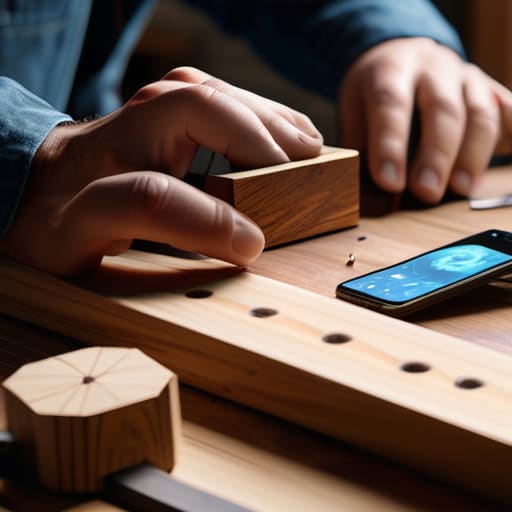
Before we dive into the fix, we need to get honest about what’s actually happening. For me, it wasn’t a sudden realization; it was a slow creep. I started noticing that I’d reach for my phone the second a task got even slightly difficult—like when I was mid-way through a complex debugging session or even just trying to follow a woodworking blueprint. These smartphone dependency symptoms often hide in plain sight. Do you find yourself instinctively checking your notifications during a lull in conversation, or perhaps feeling a phantom vibration in your pocket when your phone isn’t even there?
It’s more than just a bad habit; it’s a disruption of your natural rhythm. You might notice that your ability to sit through a movie or read a chapter of a book has plummeted, leaving you feeling restless and scattered. This constant fragmentation of your attention makes improving focus and attention span feel like an uphill battle. If you’re constantly scanning for that next digital hit, you aren’t just losing time—you’re losing the ability to be truly present in your own life.
Practical Moves to Break the Cycle and Get Your Life Back
- Curate your notifications like you’re decluttering a workspace. If a ping doesn’t come from a real person or a mission-critical app, turn it off. Most of those little red bubbles are just digital noise designed to hijack your attention.
- Create “Phone-Free Zones” in your home. I’ve found that keeping my phone out of the bedroom and away from the dining table makes a massive difference. It forces you to be present with your thoughts or the people sitting right in front of you.
- Use the “Out of Sight, Out of Mind” rule. When I’m deep in a coding session or working on a woodworking project, I put my phone in a drawer or another room entirely. If you have to physically get up to check it, you’re much less likely to do it reflexively.
- Swap mindless scrolling for “Micro-Learning” moments. Instead of opening Instagram when you have five minutes of downtime, keep a Kindle app or a technical blog bookmark ready. Turn that idle time into a chance to actually build a new skill.
- Set intentional “Digital Sunset” times. Pick a time each evening—say, 8:00 PM—where the phone goes on its charger and stays there. It gives your brain the signal that the workday and the digital noise are officially over, letting you actually relax.
Quick Wins for Reclaiming Your Mental Space
Recognize that your phone isn’t just a tool; it’s a dopamine delivery system designed to keep you scrolling, so start by acknowledging the “itch” to check it for what it really is.
Audit your daily triggers by noticing exactly when you reach for your device—whether it’s during a boring meeting or right after a stressful task—to break the automatic habit.
Shift your mindset from “quitting technology” to “curating your attention,” focusing on using your phone intentionally rather than letting it use you.
Reframing Your Relationship with the Screen
“We need to stop viewing our phones as extensions of our hands and start seeing them as what they actually are: tools. A hammer is great when you’re building something, but it’s pretty useless—and honestly, kind of a distraction—when you’re trying to sit down and enjoy a conversation or learn a new craft.”
Sarah Mitchell
Reclaiming Your Time and Your Life

At the end of the day, breaking the cycle of constant scrolling isn’t about punishing yourself or living like a hermit; it’s about understanding that your attention is your most valuable resource. We’ve looked at how that dopamine loop keeps us hooked and how easy it is to fall into those subtle, reflexive habits that eat away at our productivity. By recognizing these symptoms early, you’ve already done the hardest part: moving from unconscious habit to intentional awareness. Whether you decide to implement strict app limits or simply start leaving your phone in another room while you work, remember that every small boundary you set is a win for your mental clarity.
I want you to think about what you could do with that reclaimed time. Imagine picking up that woodworking project you’ve been putting off, finally diving into a coding tutorial, or even just sitting on your porch without the urge to check a notification. Technology should be a tool that serves your goals, not a master that dictates your focus. Don’t aim for perfection right out of the gate—just aim for progress over perfection. You have so much more to offer the world when your eyes are up and your mind is fully present. Now, go out there and build something real.
Frequently Asked Questions
How can I tell the difference between using my phone for work and just mindlessly scrolling?
It’s a fine line, isn’t it? I used to struggle with this constantly. The easiest way to tell is to check your “intent vs. outcome.” Before you pick up the device, ask yourself: “Am I looking for a specific piece of info, or am I just looking for a distraction?” If you start with a task but end up three layers deep in a stranger’s vacation photos, you’ve slipped into mindless scrolling. Intent is your compass.
What are some small, practical ways to set boundaries without feeling totally disconnected from my friends and family?
I totally get this. The last thing I want is to feel like I’m ghosting the people I love. Try setting “connection windows”—specific times when you’re fully present in your messages, rather than reacting to every ping. You can also tell your inner circle, “Hey, I’m doing a digital detox this evening to focus on some woodworking, so if I don’t reply, I’m not ignoring you!” It sets a boundary without the guilt.
I've tried deleting apps before, but I always end up reinstalling them—how do I actually make these changes stick?
I totally get it—I’ve been there, and deleting an app is often just a temporary band-aid. The trick isn’t just removing the distraction; it’s about redesigning your environment. Instead of relying on willpower, try setting up “friction.” Move your social apps off your home screen into a folder, or set your phone to grayscale. When the screen isn’t colorful and rewarding, that urge to mindless scroll starts to fade naturally.